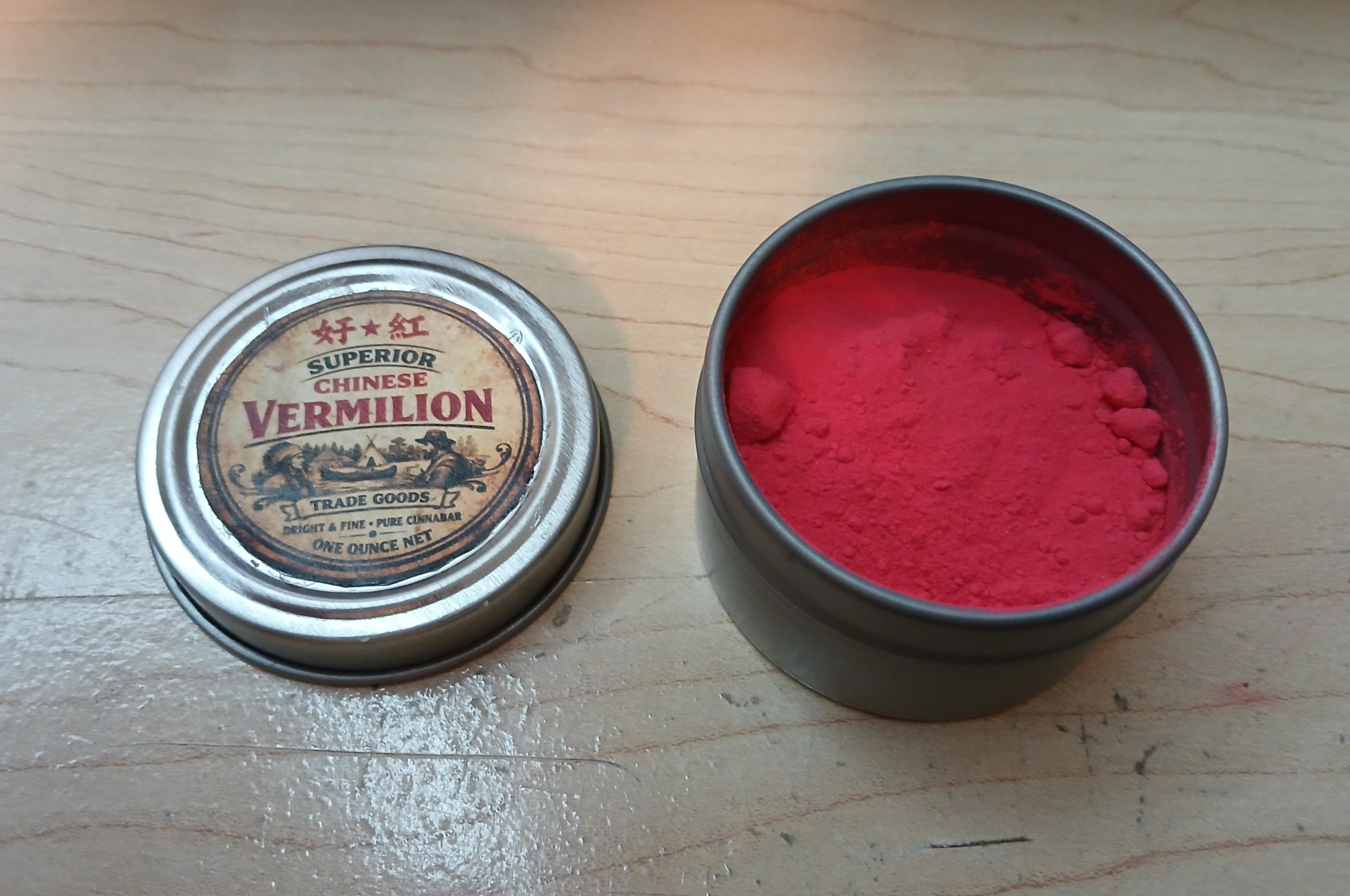
Vermilion
in the North American Fur Trade
18th – early 19th century
What
is Vermilion?
Vermilion is a bright red pigment
made from cinnabar (mercury sulfide). It was prized for its vivid color
and resistance to fading. In the fur trade era, most vermilion used in North
America was imported from China, where it had long been manufactured for
ink, seals, and ceremonial uses.
How
It Reached North America
- Produced primarily in China and shipped to
Europe.
- Re-exported by European trading companies (French,
British, later American).
- Transported to North America via:
- Hudson’s Bay Company
- North West Company
- American Fur Company
- Distributed inland by canoe brigades and pack trains to
frontier trading posts.
How
It Was Packaged
- Often imported in small paper packets or wrapped
bundles.
- Sometimes stored in bulk containers at trading
posts and sold by weight.
- Compact and lightweight, making it ideal for long-distance
transport.
- Occasionally repackaged into tins or small containers
by traders or later merchants.
How
It Was Used by Native Peoples
- Face and body paint
for ceremonies and warfare.
- Decoration of:
- Clothing
- Moccasins
- Quillwork and beadwork
- Shields and personal items
- Associated with:
- Power
- War
- Spiritual protection
- Status and beauty
Trade
Value
- Highly desirable trade good, comparable in importance
to:
- Beads
- Cloth
- Metal tools
- Usually sold in small quantities.
- Appears frequently in post inventories and trader
account books as:
- “vermilion”
- “red paint”
- “Chinese red”
Cultural
Significance
Red pigments held deep symbolic
meaning in many Native cultures:
- Life and blood
- Victory and bravery
- Spiritual potency
- Identity and tribal expression
Because vermilion produced a
brighter and longer-lasting red than many natural local pigments, it quickly
replaced earlier mineral and plant reds in many regions.
Health
Note (Unknown at the Time)
Vermilion contains mercury
sulfide.
Its toxicity was not well understood in the fur trade era. Prolonged exposure
could be harmful, but it was widely used in cosmetics, inks, and medicines in
both Europe and Asia.
Typical
Trade Description (period style)
“Chinese Vermilion, bright and fine,
for paint and ornament.”
Modern
Availability
Due to its toxicity and to the fact
that there are safer modern substitutes, real vermilion is rare and difficult
to find these days.